
 Vietnam


Morocco Builds World Cup Squad Through Global Recruitment; 19 of 26 Players Born Abroad
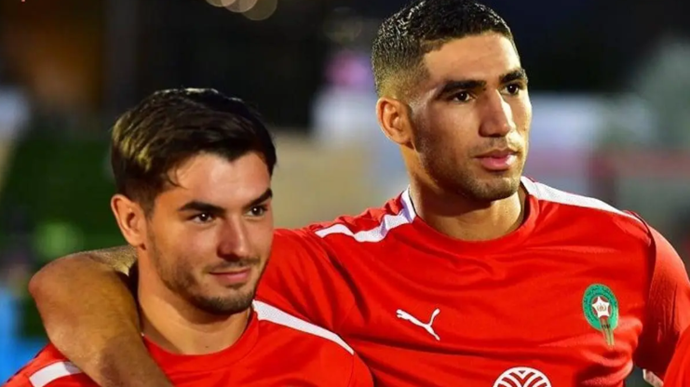
According to Mundo Deportivo, since their stunning run to the semifinals of the 2022 Qatar World Cup, Morocco have been tirelessly working to improve their competitive structure. Beyond tactical preparations on the pitch, the Royal Moroccan Football Federation has delivered a masterclass in boardroom strategy, meticulously navigating FIFA's eligibility rules to harvest top football talent from around the globe.
In modern football, victory depends not only on players' performances but also on off-field strategy. Morocco's 26-man World Cup squad features an astonishing 19 players born outside the country – the result of a years-long global strategy.
Current FIFA rules stipulate that players require more than just a passport to represent a nation; they must also have a "sporting-legal link." This includes being born in the country, having a parent or grandparent born there, or having resided there for a specific period.
The Moroccan Federation shrewdly utilized the 2024 rule reform, which allows players to switch national teams provided they have not played in an official senior A-level international match for their previous association. This provides legal cover for Morocco to secure top dual-nationality talents.
Goalkeeper position: Morocco's goalkeeping situation perfectly illustrates this "dual belonging." First-choice goalkeeper Yassine Bounou was born in Montreal, Canada, and was originally eligible to represent Canada. However, he moved back to Morocco with his family as a child, received his football education there, firmly chose to play for the "Atlas Lions," and has grown into one of Africa's best goalkeepers. Second-choice Munir Mohamedi was born in Melilla, Spain. Despite starting his career in the Spanish leagues, he opted to represent his ancestral homeland.
Among Morocco's overseas recruitment drive, the "Spanish contingent" is the most prominent.
Achraf Hakimi: Born in Madrid, has been the figurehead of the Morocco team for years and a benchmark for returning diaspora talent.
Brahim Díaz: The Real Madrid star's switch was a major diplomatic victory for the Moroccan Federation. Born in Málaga and a regular for Spain's youth teams, he ultimately decided to represent Morocco in 2024. This was seen as a testament to Morocco's pulling power – no longer just receiving players discarded by European powerhouses, but able to snatch top talent directly from Spain.
Although Lamine Yamal ultimately chose Spain and won the European Championship, Morocco were not deterred. The additions of players like Chadi Riad (born in Palma) and Ismael Saibari (born in Tarazona) continue to strengthen their "Spanish brigade."
France is another major source of talent for Morocco. Due to the large Moroccan diaspora, many Franco-Moroccan players have trained at France's prestigious Clairefontaine academy.
The most notable case is 18-year-old Lille prodigy Ayyoub Bouaddi. Having represented France at various youth levels and considered one of Europe's most promising prospects, Morocco secured him with just one senior call-up.
Similarly, the recruitment of 29-year-old Issa Diop is emblematic. The Toulouse-born center-back had a triple choice (France, Senegal, Morocco). After a prolonged absence from the senior France squad, Morocco convinced him to join with a simple argument: here, he would have a better chance of making history at a World Cup.
In the Netherlands and Belgium, Morocco's scouting network has also been highly effective.
Netherlands: Noussair Mazraoui (born in Leiderdorp) and Sofyan Amrabat (born in Huizen) are already core members of the team. Morocco are currently accelerating efforts to secure talented Dutch-Moroccans from the academies of Feyenoord and PSV before the Dutch FA can react.
Belgium: The recruitment of 22-year-old Bilal El Khannous is a classic case. He represented Belgium at various youth levels but was ultimately convinced by Morocco's sporting project.
Morocco's global recruitment drive continues. Tiago Pitač, currently at Real Madrid's academy, has expressed his dream of playing for Spain, but as long as he remains uncapped by the senior side, the Moroccan Federation will keep calling.
Through this "globalized mindset," Morocco have successfully converted top-class European youth development into their own competitive strength. In 2026, this "combined legion," possessing European discipline, South American flair, and African resilience, will challenge for the ultimate prize in world football.
Source: Mundo Deportivo
From:News
TAG
FIFA World Cup
The Most Popular
-
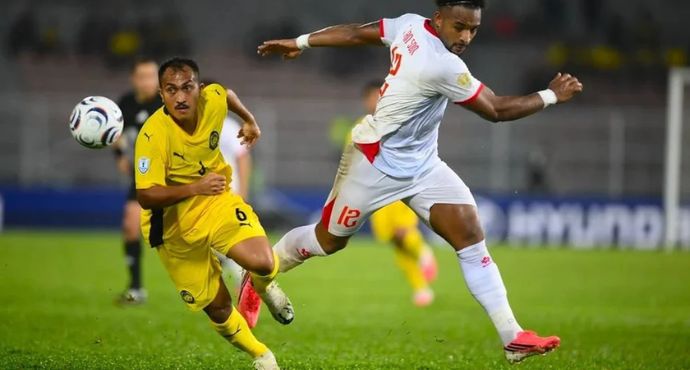 Vietnam Stuns Malaysia 2-0 in ASEAN Cup Semi-Final First Leg
 -
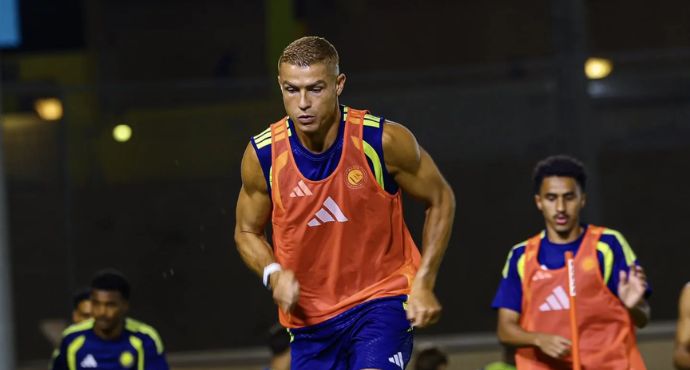 Cristiano Ronaldo Returns to Al Nassr Training with 1,000-Goal Milestone in Sight
 -
 German Bundesliga 2---Holstein Kiel VS St. Pauli Prediction
 -
 Austrian Bundesliga---LASK Linz VS SV Ried Prediction
 -
 England Championship---Wolves VS Blackburn Rovers Prediction
 -
 Ferran Torres Completes €50m Move to Paris Saint-Germain from Barcelona
