
 Vietnam


Trusted sports betting: the rules for matches that break
Trusted sports betting hides its real terms in the settlement rules, not the odds board. 4 abnormal situations decide most disputes. Read the clauses.
The page that moves the most money is the one nobody opens. Odds change every hour and get studied; the settlement rules change twice a year and get ignored. Yet trusted sports betting is judged on exactly those clauses, because they take over the moment a match stops behaving normally.
What does a rule book decide that a price page cannot?
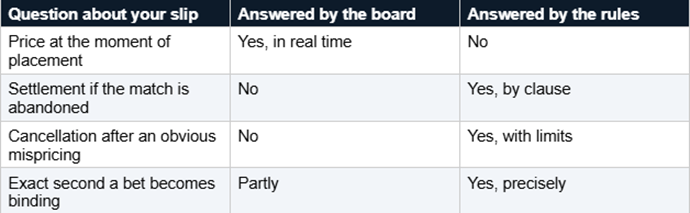
Prices answer 1 question. Everything that happens after kick-off is answered somewhere else, in a document written by lawyers rather than traders.
What the odds board shows and what it leaves out
The board is a live price feed. Trusted sports betting keeps the consequences in a separate text, and the split is clean once you see it.
The 4 events that most settlement disputes come from
4 situations generate the bulk of arguments, and each has its own clause sitting in the rule book.
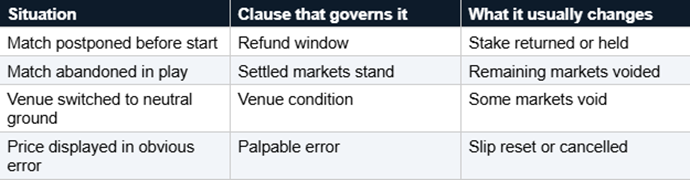
How does trusted sports betting settle an unfinished match?
A postponed match and an abandoned match follow different clauses, and mixing them up is the most common reading mistake.
The refund window that decides return or reschedule
Most rule books set a window: if the fixture restarts inside it, bets stand; outside it, stakes return. Trusted sports betting states the length of that window in hours rather than leaving it open, and operators differ, with 48 hours and 72 hours both common in published terms. A lobby such as SUNWIN will carry its own figure, so read the number there rather than assuming the one you saw elsewhere. The clock usually runs from the scheduled start, not from the announcement.
What a void leg does to the rest of an accumulator
Voiding 1 leg rarely kills a multi. The standard treatment removes that selection and recalculates the remaining legs at their own prices, so a 5-fold becomes a 4-fold with a lower return. Free bet and bonus multis behave differently, because a voided leg can break the minimum-legs condition the promotion required. Check whether your slip was funded by a promotion before assuming the recalculation is automatic.
Does a switch to a neutral venue void a bet?
Sometimes, and the answer depends on the market rather than the match.
Home and away labels are part of the bet you placed
A handicap on the home side is a bet on a specific designation, not only on a team. Move the fixture to neutral ground and that designation loses its meaning, which is why trusted sports betting rule books carry a venue clause. The clause typically voids bets on markets where home advantage is priced in, while leaving others alone. A change of stadium inside the same city is treated differently again by many operators.
Which markets survive a venue change and which do not
Rule books rarely list every market, so the safe reading is by category.
When can an operator cancel a slip over a wrong price?
A price that is clearly wrong can be reversed, and trusted sports betting rule books define that power narrowly rather than broadly.
Palpable error clauses and the limits written into them
A palpable error clause lets an operator void or reprice a bet taken at a price that was obviously wrong. A decimal in the wrong place, a market left open after a goal, a feed that froze mid-match. The limits matter as much as the power. A well written clause names who reviews the error, the time limit for raising it, and the rule that the stake comes back in full. A clause with no time limit and no review step gives an operator room that no bettor can check. That asymmetry is the honest weakness of this part of any rule book.
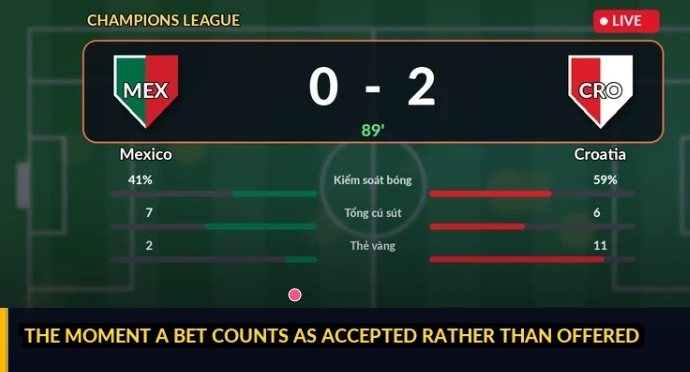
The moment a bet counts as accepted rather than offered
Pressing confirm is an offer, not a contract. On a site like SUNWIN20, in-play betting adds a delay of a few seconds in which a slip can still be rejected. Trusted sports betting logs the same sequence every time.
The odds move all week, the rule book barely moves at all
Reading the settlement rules will not improve a single price you get. Anyone comparing trusted sports betting terms only learns which slips are exposed to a clause they have never seen, which is a smaller benefit than it sounds and a real one. Nobody can verify from the outside how consistently any operator applies its own void bet clauses, and that limit is worth stating plainly. Trusted sports betting is a claim made on the odds page and settled on the rules page, about 20 minutes of reading apart.
The page that moves the most money is the one nobody opens. Odds change every hour and get studied; the settlement rules change twice a year and get ignored. Yet trusted sports betting is judged on exactly those clauses, because they take over the moment a match stops behaving normally.
What does a rule book decide that a price page cannot?
Prices answer 1 question. Everything that happens after kick-off is answered somewhere else, in a document written by lawyers rather than traders.
What the odds board shows and what it leaves out
The board is a live price feed. Trusted sports betting keeps the consequences in a separate text, and the split is clean once you see it.
The 4 events that most settlement disputes come from
4 situations generate the bulk of arguments, and each has its own clause sitting in the rule book.
How does trusted sports betting settle an unfinished match?
A postponed match and an abandoned match follow different clauses, and mixing them up is the most common reading mistake.
The refund window that decides return or reschedule
Most rule books set a window: if the fixture restarts inside it, bets stand; outside it, stakes return. Trusted sports betting states the length of that window in hours rather than leaving it open, and operators differ, with 48 hours and 72 hours both common in published terms. A lobby such as SUNWIN will carry its own figure, so read the number there rather than assuming the one you saw elsewhere. The clock usually runs from the scheduled start, not from the announcement.
What a void leg does to the rest of an accumulator
Voiding 1 leg rarely kills a multi. The standard treatment removes that selection and recalculates the remaining legs at their own prices, so a 5-fold becomes a 4-fold with a lower return. Free bet and bonus multis behave differently, because a voided leg can break the minimum-legs condition the promotion required. Check whether your slip was funded by a promotion before assuming the recalculation is automatic.
Does a switch to a neutral venue void a bet?
Sometimes, and the answer depends on the market rather than the match.
Home and away labels are part of the bet you placed
A handicap on the home side is a bet on a specific designation, not only on a team. Move the fixture to neutral ground and that designation loses its meaning, which is why trusted sports betting rule books carry a venue clause. The clause typically voids bets on markets where home advantage is priced in, while leaving others alone. A change of stadium inside the same city is treated differently again by many operators.
Which markets survive a venue change and which do not
Rule books rarely list every market, so the safe reading is by category.
- Outright winner markets on a tournament normally survive any venue change
- Match result and handicap markets are the ones most often voided
- Total goals markets usually stand, since no side is favoured by the label
- In-play betting placed after the switch stands, because you knew the venue
When can an operator cancel a slip over a wrong price?
A price that is clearly wrong can be reversed, and trusted sports betting rule books define that power narrowly rather than broadly.
Palpable error clauses and the limits written into them
A palpable error clause lets an operator void or reprice a bet taken at a price that was obviously wrong. A decimal in the wrong place, a market left open after a goal, a feed that froze mid-match. The limits matter as much as the power. A well written clause names who reviews the error, the time limit for raising it, and the rule that the stake comes back in full. A clause with no time limit and no review step gives an operator room that no bettor can check. That asymmetry is the honest weakness of this part of any rule book.
The moment a bet counts as accepted rather than offered
Pressing confirm is an offer, not a contract. On a site like SUNWIN20, in-play betting adds a delay of a few seconds in which a slip can still be rejected. Trusted sports betting logs the same sequence every time.
- You submit a price and a stake from your own screen
- The server checks the market is still open at that price
- The slip is accepted, timestamped and given a reference
- Only then does the stake leave your available balance
The odds move all week, the rule book barely moves at all
Reading the settlement rules will not improve a single price you get. Anyone comparing trusted sports betting terms only learns which slips are exposed to a clause they have never seen, which is a smaller benefit than it sounds and a real one. Nobody can verify from the outside how consistently any operator applies its own void bet clauses, and that limit is worth stating plainly. Trusted sports betting is a claim made on the odds page and settled on the rules page, about 20 minutes of reading apart.
The Most Popular
-
 FC Barcelona vs. Real Madrid: Match Prediction---2026/10/26
-
 Manchester United vs. AFC Bournemouth: Match Prediction---2026/10/25
-
 Inter Milan vs. Fiorentina: Match Prediction---2026/10/25
-
 SC Freiburg vs. Bayern Munich: Match Prediction---2026/10/26
-
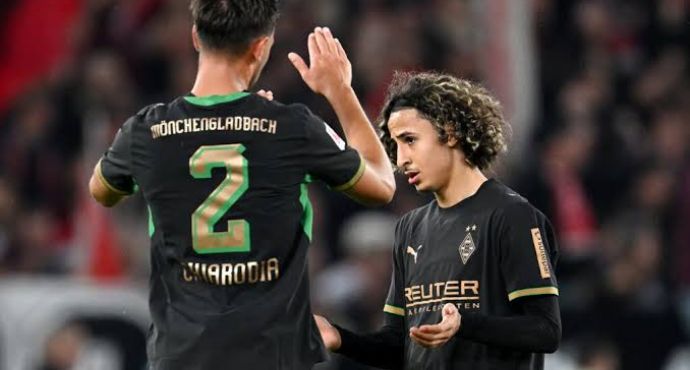 Injury-Hit Gladbach Stun Stuttgart to Claim Heroic First Bundesliga Win
-
 Mail: Mourinho Doesn't Trust Alexander-Arnold's Defending; Won't Entrust Him with Big Games at Real Madrid
