
 Vietnam


Live Roulette B52Club: Mastering the Wheel and Table Strategy
Master live roulette at B52Club with expert strategies, betting systems, and actionable tips designed to improve your gameplay and table management.
Live Roulette B52Club: Mastering the Wheel and Table Strategy
Navigating the world of live dealer table games requires more than just choosing a lucky number and hoping for the best. When engaging with live roulette B52Club, participants often find themselves overwhelmed by the pacing of the live wheel, the array of betting options, and the pressure of managing a bankroll in real time. Understanding the mechanics behind the digital interface and the physical wheel is the first step toward transforming casual participation into a structured, analytical pursuit.
The shift from standard virtual table software to live-streamed casino environments changes the dynamic entirely. Instead of relying on random number generators, live roulette streams real dealers operating physical equipment, introducing authentic pacing and transparency. For newcomers and seasoned veterans alike, mastering this environment demands a comprehensive look at table etiquette, betting layouts, and the mathematical probabilities that govern every spin of the wheel.
(Ảnh 1)
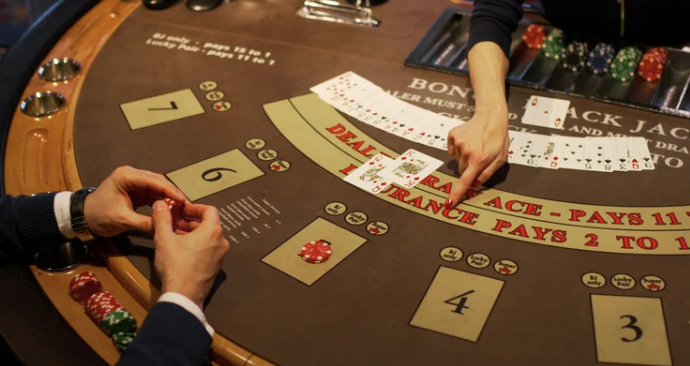
Image Title: Professional live roulette studio setup showing a spinning wheel and betting table layout
Understanding the Fundamentals of Live Roulette
Before diving into complex wagering systems, players must master the core rules and wheel layouts that define the game. The distinction between European, American, and French variants dictates the underlying house edge and strategic potential available during a session.
European Versus American Wheels
The primary difference between wheel variants lies in the presence of the double zero on American layouts, which alters the statistical probability of every wager. A standard European wheel features thirty-seven pockets, numbered zero through thirty-six, resulting in a house edge of approximately 2.70 percent. In contrast, the American layout adds a double zero, expanding the total pockets to thirty-eight and pushing the house edge to roughly 5.26 percent. When participating through live roulette B52Club, recognizing which wheel variant is active allows participants to optimize their expected return over extended sessions. Selecting the single-zero European layout whenever possible remains the foundational rule for any disciplined participant seeking to minimize long-term losses.
Inside Bets Versus Outside Bets
Wagering options on the felt are divided into two main categories: inside bets and outside bets, each carrying distinct risk-reward profiles. Inside bets target specific numbers or small groups of numbers, offering high payouts such as thirty-five to one for a straight-up wager, but accompanied by lower statistical probabilities of hitting. Outside bets cover broader categories, such as red or black, odd or even, and high or low numbers, providing nearly fifty-fifty odds with a payout of one to one. Balancing these two categories depends on individual risk tolerance and bankroll capacity. Conservative participants often lean toward outside wagers to preserve their funds, while those seeking volatile swings incorporate strategic inside combinations into their sessions.
The Role of the Live Dealer
Live dealer interactions introduce a human element that static software completely lacks, influencing the psychological and temporal aspects of the game. Professional croupiers manage the physical wheel, announce betting windows, and interact with the chat interface, creating an immersive atmosphere that mirrors a physical casino floor. Understanding the cadence of the dealer helps participants avoid rushed decisions during high-pressure moments. Furthermore, observing how different dealers spin the ball can sometimes provide a rhythmic familiarity, though each spin remains an independent statistical event governed by physical laws rather than predictable patterns.
(Ảnh 2)

Image Title: Close-up of a live dealer interacting with participants at a roulette table
Implementing Effective Betting Systems
Wagering progression systems have been debated for centuries, offering structured frameworks for managing risk and adjusting stake sizes after wins or losses. While no system can overcome the inherent mathematical house edge, utilizing a structured approach prevents emotional decision-making during volatile streaks.
The Martingale and Progressive Recovery
The Martingale system is arguably the most recognized progression strategy, relying on doubling the stake after every loss to recover previous deficits with a single win. Proponents argue that an eventual win on an outside evens-money bet will cover all preceding losses plus a profit equal to the original base stake. However, practical application requires extreme caution due to table limits and the reality of finite bankrolls. A prolonged sequence of consecutive losses can exhaust funds rapidly before a recovery occurs. When applying progressive concepts within live roulette B52Club, setting strict loss limits and adhering to a modest base unit is essential to prevent catastrophic drawdowns.
The D'Alembert Balanced Approach
For participants seeking a more conservative progression than the aggressive doubling of the Martingale, the D'Alembert system offers a balanced alternative. This strategy involves increasing the stake by one unit after a loss and decreasing it by one unit after a win, based on the assumption of eventual equilibrium between wins and losses. Because increments are linear rather than exponential, the risk of hitting table limits or depleting a bankroll is significantly lower. This makes the D'Alembert system particularly suitable for extended sessions on outside bets, allowing participants to enjoy prolonged entertainment without severe financial exposure.
Flat Betting and Bankroll Preservation
Flat betting involves wagering the exact same amount on every single spin, regardless of recent outcomes, prioritizing longevity and disciplined risk management over aggressive recovery. This method eliminates the danger of exponential loss escalation and keeps emotional volatility to a minimum. By calculating a strict session bankroll divided into manageable units, participants can weather natural variance without altering their financial comfort zone. Combining flat betting with careful selection of European wheel variants represents the most mathematically sound approach for long-term enjoyment of live casino offerings.
(Ảnh 3)
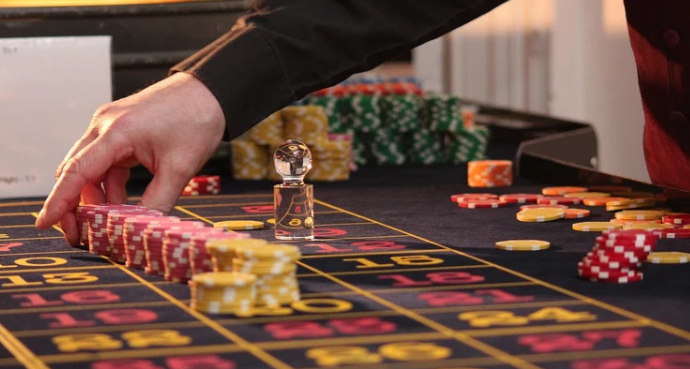
Image Title: Detailed view of casino chips and betting strategies laid out on a roulette table
Analyzing Table Statistics and History
Modern live dealer interfaces provide extensive historical data, including recent winning numbers, hot and cold numbers, and statistical distribution percentages. Interpreting this data correctly requires a clear understanding of probability theory and the independence of each spin.
The Gambler's Fallacy in Practice
A common pitfall among table participants is falling victim to the gambler's fallacy—the mistaken belief that if a red number has appeared five times in a row, black is somehow 'due' to appear next. In reality, every spin of the roulette wheel is an independent event unaffected by previous outcomes. The wheel has no memory, and the mathematical probability of hitting red or black remains identical on every single round, regardless of historical streaks. Recognizing this psychological trap prevents participants from chasing losses based on perceived patterns that exist only in human imagination.
Utilizing Hot and Cold Trackers
While statistical trackers do not alter the house edge, they can assist participants in quickly identifying which numbers or sectors have appeared frequently during a specific session. Some participants use this data to place speculative wagers on cold sectors, hoping for a statistical correction, while others ride hot streaks for short-term gains. Maintaining a pragmatic view of these trackers is crucial; they should be treated as entertaining interface features rather than guaranteed predictive tools. Combining tracker data with strict bankroll rules ensures that analytical observation enhances the experience without leading to irrational wagering.
Sector Betting and Racetrack Layouts
Racetrack layouts allow participants to place announced bets that cover specific physical sections of the wheel, such as Voisins du Zéro, Tiers du Cylindre, and Orphelins. These sectional wagers enable more targeted strategies than standard outside bets, grouping adjacent numbers together to cover significant portions of the wheel surface. Understanding how these sector bets distribute risk across the physical wheel provides advanced participants with additional flexibility when designing their table approach.
Image Title: Digital interface displaying historical statistics and racetrack betting options
Managing Bankroll and Session Limits
Sustainable participation in live dealer games depends entirely on rigorous financial discipline and the establishment of clear operational boundaries before joining a table.
Establishing Stop-Loss and Win Limits
The most effective tool for protecting funds is the strict enforcement of pre-determined stop-loss and win thresholds. Before placing the first wager, participants should define the maximum amount they are willing to lose during a session and the profit target that will trigger an immediate departure. Greed and frustration are the primary drivers of poor decision-making at the table; having rigid limits removes emotion from the equation. Walking away immediately upon reaching either threshold preserves capital and ensures that entertainment remains controlled and enjoyable.
Unit Sizing and Risk Management
Proper unit sizing dictates that a session bankroll should be divided into at least fifty to one hundred individual units to absorb normal statistical variance. If a participant allocates a specific budget for an evening, dividing that total by one hundred establishes a safe base stake that prevents a quick sequence of losses from ending the session prematurely. Maintaining consistent unit sizes aligned with overall financial capacity ensures a steady, measured pace during live dealer sessions.
Emotional Control in Live Environments
The rapid pacing and immersive nature of live casino broadcasts can easily trigger impulsive behavior, particularly during losing streaks or near-misses. Maintaining emotional detachment requires recognizing the signs of tilt—frustration, anger, or the urge to place reckless high-stakes wagers to recover losses. Taking regular breaks, stepping away from the screen, and resetting mental focus are essential practices for anyone engaging in prolonged table sessions. True mastery of the game begins with self-discipline and emotional regulation.
Image Title: Focused participant managing chips and monitoring a live roulette session
Conclusion
Mastering live roulette B52 combines an understanding of wheel variants, disciplined bankroll management, and strategic wagering systems. By prioritizing European wheel layouts, avoiding the psychological trap of the gambler's fallacy, and strictly enforcing session stop-loss limits, participants can navigate the live dealer environment with confidence and clarity. Approach every session with a structured plan, view statistical history as entertainment rather than prophecy, and maintain complete control over your financial units to ensure a sustainable and rewarding experience.
Live Roulette B52Club: Mastering the Wheel and Table Strategy
Navigating the world of live dealer table games requires more than just choosing a lucky number and hoping for the best. When engaging with live roulette B52Club, participants often find themselves overwhelmed by the pacing of the live wheel, the array of betting options, and the pressure of managing a bankroll in real time. Understanding the mechanics behind the digital interface and the physical wheel is the first step toward transforming casual participation into a structured, analytical pursuit.
The shift from standard virtual table software to live-streamed casino environments changes the dynamic entirely. Instead of relying on random number generators, live roulette streams real dealers operating physical equipment, introducing authentic pacing and transparency. For newcomers and seasoned veterans alike, mastering this environment demands a comprehensive look at table etiquette, betting layouts, and the mathematical probabilities that govern every spin of the wheel.
(Ảnh 1)
Image Title: Professional live roulette studio setup showing a spinning wheel and betting table layout
Understanding the Fundamentals of Live Roulette
Before diving into complex wagering systems, players must master the core rules and wheel layouts that define the game. The distinction between European, American, and French variants dictates the underlying house edge and strategic potential available during a session.
European Versus American Wheels
The primary difference between wheel variants lies in the presence of the double zero on American layouts, which alters the statistical probability of every wager. A standard European wheel features thirty-seven pockets, numbered zero through thirty-six, resulting in a house edge of approximately 2.70 percent. In contrast, the American layout adds a double zero, expanding the total pockets to thirty-eight and pushing the house edge to roughly 5.26 percent. When participating through live roulette B52Club, recognizing which wheel variant is active allows participants to optimize their expected return over extended sessions. Selecting the single-zero European layout whenever possible remains the foundational rule for any disciplined participant seeking to minimize long-term losses.
Inside Bets Versus Outside Bets
Wagering options on the felt are divided into two main categories: inside bets and outside bets, each carrying distinct risk-reward profiles. Inside bets target specific numbers or small groups of numbers, offering high payouts such as thirty-five to one for a straight-up wager, but accompanied by lower statistical probabilities of hitting. Outside bets cover broader categories, such as red or black, odd or even, and high or low numbers, providing nearly fifty-fifty odds with a payout of one to one. Balancing these two categories depends on individual risk tolerance and bankroll capacity. Conservative participants often lean toward outside wagers to preserve their funds, while those seeking volatile swings incorporate strategic inside combinations into their sessions.
The Role of the Live Dealer
Live dealer interactions introduce a human element that static software completely lacks, influencing the psychological and temporal aspects of the game. Professional croupiers manage the physical wheel, announce betting windows, and interact with the chat interface, creating an immersive atmosphere that mirrors a physical casino floor. Understanding the cadence of the dealer helps participants avoid rushed decisions during high-pressure moments. Furthermore, observing how different dealers spin the ball can sometimes provide a rhythmic familiarity, though each spin remains an independent statistical event governed by physical laws rather than predictable patterns.
(Ảnh 2)
Image Title: Close-up of a live dealer interacting with participants at a roulette table
Implementing Effective Betting Systems
Wagering progression systems have been debated for centuries, offering structured frameworks for managing risk and adjusting stake sizes after wins or losses. While no system can overcome the inherent mathematical house edge, utilizing a structured approach prevents emotional decision-making during volatile streaks.
The Martingale and Progressive Recovery
The Martingale system is arguably the most recognized progression strategy, relying on doubling the stake after every loss to recover previous deficits with a single win. Proponents argue that an eventual win on an outside evens-money bet will cover all preceding losses plus a profit equal to the original base stake. However, practical application requires extreme caution due to table limits and the reality of finite bankrolls. A prolonged sequence of consecutive losses can exhaust funds rapidly before a recovery occurs. When applying progressive concepts within live roulette B52Club, setting strict loss limits and adhering to a modest base unit is essential to prevent catastrophic drawdowns.
The D'Alembert Balanced Approach
For participants seeking a more conservative progression than the aggressive doubling of the Martingale, the D'Alembert system offers a balanced alternative. This strategy involves increasing the stake by one unit after a loss and decreasing it by one unit after a win, based on the assumption of eventual equilibrium between wins and losses. Because increments are linear rather than exponential, the risk of hitting table limits or depleting a bankroll is significantly lower. This makes the D'Alembert system particularly suitable for extended sessions on outside bets, allowing participants to enjoy prolonged entertainment without severe financial exposure.
Flat Betting and Bankroll Preservation
Flat betting involves wagering the exact same amount on every single spin, regardless of recent outcomes, prioritizing longevity and disciplined risk management over aggressive recovery. This method eliminates the danger of exponential loss escalation and keeps emotional volatility to a minimum. By calculating a strict session bankroll divided into manageable units, participants can weather natural variance without altering their financial comfort zone. Combining flat betting with careful selection of European wheel variants represents the most mathematically sound approach for long-term enjoyment of live casino offerings.
(Ảnh 3)
Image Title: Detailed view of casino chips and betting strategies laid out on a roulette table
Analyzing Table Statistics and History
Modern live dealer interfaces provide extensive historical data, including recent winning numbers, hot and cold numbers, and statistical distribution percentages. Interpreting this data correctly requires a clear understanding of probability theory and the independence of each spin.
The Gambler's Fallacy in Practice
A common pitfall among table participants is falling victim to the gambler's fallacy—the mistaken belief that if a red number has appeared five times in a row, black is somehow 'due' to appear next. In reality, every spin of the roulette wheel is an independent event unaffected by previous outcomes. The wheel has no memory, and the mathematical probability of hitting red or black remains identical on every single round, regardless of historical streaks. Recognizing this psychological trap prevents participants from chasing losses based on perceived patterns that exist only in human imagination.
Utilizing Hot and Cold Trackers
While statistical trackers do not alter the house edge, they can assist participants in quickly identifying which numbers or sectors have appeared frequently during a specific session. Some participants use this data to place speculative wagers on cold sectors, hoping for a statistical correction, while others ride hot streaks for short-term gains. Maintaining a pragmatic view of these trackers is crucial; they should be treated as entertaining interface features rather than guaranteed predictive tools. Combining tracker data with strict bankroll rules ensures that analytical observation enhances the experience without leading to irrational wagering.
Sector Betting and Racetrack Layouts
Racetrack layouts allow participants to place announced bets that cover specific physical sections of the wheel, such as Voisins du Zéro, Tiers du Cylindre, and Orphelins. These sectional wagers enable more targeted strategies than standard outside bets, grouping adjacent numbers together to cover significant portions of the wheel surface. Understanding how these sector bets distribute risk across the physical wheel provides advanced participants with additional flexibility when designing their table approach.
Image Title: Digital interface displaying historical statistics and racetrack betting options
Managing Bankroll and Session Limits
Sustainable participation in live dealer games depends entirely on rigorous financial discipline and the establishment of clear operational boundaries before joining a table.
Establishing Stop-Loss and Win Limits
The most effective tool for protecting funds is the strict enforcement of pre-determined stop-loss and win thresholds. Before placing the first wager, participants should define the maximum amount they are willing to lose during a session and the profit target that will trigger an immediate departure. Greed and frustration are the primary drivers of poor decision-making at the table; having rigid limits removes emotion from the equation. Walking away immediately upon reaching either threshold preserves capital and ensures that entertainment remains controlled and enjoyable.
Unit Sizing and Risk Management
Proper unit sizing dictates that a session bankroll should be divided into at least fifty to one hundred individual units to absorb normal statistical variance. If a participant allocates a specific budget for an evening, dividing that total by one hundred establishes a safe base stake that prevents a quick sequence of losses from ending the session prematurely. Maintaining consistent unit sizes aligned with overall financial capacity ensures a steady, measured pace during live dealer sessions.
Emotional Control in Live Environments
The rapid pacing and immersive nature of live casino broadcasts can easily trigger impulsive behavior, particularly during losing streaks or near-misses. Maintaining emotional detachment requires recognizing the signs of tilt—frustration, anger, or the urge to place reckless high-stakes wagers to recover losses. Taking regular breaks, stepping away from the screen, and resetting mental focus are essential practices for anyone engaging in prolonged table sessions. True mastery of the game begins with self-discipline and emotional regulation.
Image Title: Focused participant managing chips and monitoring a live roulette session
Conclusion
Mastering live roulette B52 combines an understanding of wheel variants, disciplined bankroll management, and strategic wagering systems. By prioritizing European wheel layouts, avoiding the psychological trap of the gambler's fallacy, and strictly enforcing session stop-loss limits, participants can navigate the live dealer environment with confidence and clarity. Approach every session with a structured plan, view statistical history as entertainment rather than prophecy, and maintain complete control over your financial units to ensure a sustainable and rewarding experience.
The Most Popular
-
 FC Barcelona vs. Real Madrid: Match Prediction---2026/10/26
-
 Manchester United vs. AFC Bournemouth: Match Prediction---2026/10/25
-
 Inter Milan vs. Fiorentina: Match Prediction---2026/10/25
-
 SC Freiburg vs. Bayern Munich: Match Prediction---2026/10/26
-
 Injury-Hit Gladbach Stun Stuttgart to Claim Heroic First Bundesliga Win
-
 Mail: Mourinho Doesn't Trust Alexander-Arnold's Defending; Won't Entrust Him with Big Games at Real Madrid
