
 Vietnam


Rikvip Bau Cua with Six Symbols and How Results Are Determined
Meta description: Rikvip Bau Cua uses three dice featuring six symbols: Gourd, Crab, Shrimp, Fish, Rooster, and Deer, with results based on how many times each symbol appears.
Rikvip Bau Cua is inspired by the familiar Vietnamese traditional game featuring six symbols: Gourd, Crab, Shrimp, Fish, Rooster, and Deer. Each round uses three dice, with each face representing one animal or object, after which the results are revealed and compared with the symbols on the table. The defining feature of the game is that a symbol may appear zero, one, two, or all three times in the same round.
Six symbols on the Bau Cua table
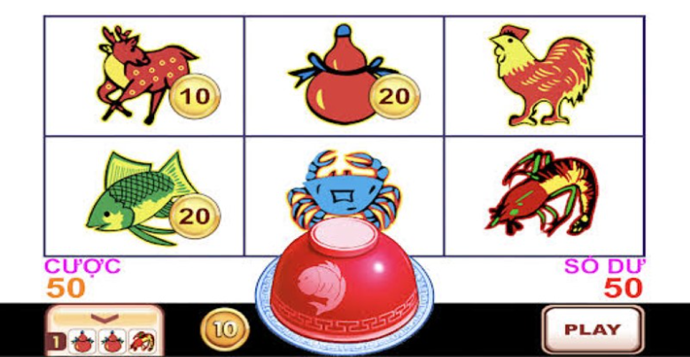
Bau Cua uses six familiar symbols, with each one representing a face on the dice. The six images are Gourd, Crab, Shrimp, Fish, Rooster, and Deer. Their positions on the interface may vary, but this does not change the meaning of each symbol.
Gourd and Crab
Gourd and Crab are two symbols from the traditional set used in the game. On the table, each symbol usually has its own betting area for users to select before the result is revealed.
When either symbol appears on the dice, the number of times it appears determines how the result is matched. Therefore, simply determining whether a symbol appears or not does not fully reflect the outcome of the round.
Shrimp and Fish
Shrimp and Fish provide two other choices among the six symbol areas at Rik Vip. Each die face contains only one image, so the three dice can produce three identical symbols or a combination of different images once revealed.
Whether Shrimp or Fish appears once, twice, or three times is recorded separately. This is what allows a single Bau Cua round to produce results for multiple betting areas at the same time.
Rooster and Deer
Rooster and Deer complete the set of six Bau Cua symbols. Like the other symbols, each can appear on up to three dice within the same round.
Deer is also one of the symbols commonly found in Vietnamese versions of Bau Cua, although the names and image sets may vary in certain game variants.
How do the three dice create the result?
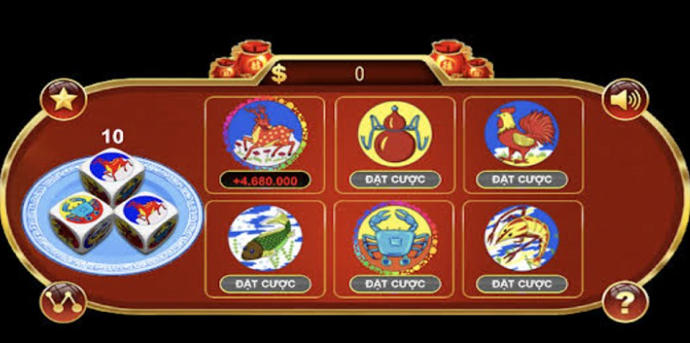
Unlike conventional dice with numbered faces, Bau Cua dice use images of symbols instead of dots or numbers. Each die has six faces corresponding to the six symbols, so three images are available to determine the result after the dice are revealed.
A round may produce three completely different symbols, two identical symbols alongside a different one, or the same symbol on all three dice. Each case is evaluated according to how many times the selected symbol appears.
Three different symbols
If the three dice show Gourd, Crab, and Fish respectively, each symbol appears once. In this case, users who selected Gourd, Crab, or Fish each have a result corresponding to one appearance, while the other betting areas do not appear.
This shows that a single round does not necessarily produce a result for only one betting option. The three dice can simultaneously match multiple choices on the table.
Two dice with the same symbol
When two dice show the same symbol, such as Crab, Crab, and Rooster, Crab is recorded twice while Rooster appears once. This is commonly considered a visual pair result.
The number of appearances is calculated independently for each symbol. Therefore, if Crab was selected, the result is evaluated based on two appearances rather than simply recording that Crab appeared.
Three dice with the same symbol
When all three dice display the same symbol, the result represents three appearances. For example, if all three dice show Fish, the Fish symbol appears on all three dice.
This is a special situation because a single selection matches all three results. Under common payout structures, the more times the selected symbol appears, the greater the return associated with that selection.
How is the result for a symbol calculated?
The key point when reading Bau Cua is the number of times a symbol appears rather than the combined value of the three dice. If the selected symbol does not appear, the corresponding selection produces no result. If it appears once, twice, or three times, each case is processed according to the number of matching appearances.
Under common payout rules, one appearance corresponds to 1x the stake, two appearances correspond to 2x, and three appearances correspond to 3x, in addition to the return of the original stake according to the applicable rules. However, the exact payout for each Rikvip table should be checked directly on the interface if specific conditions apply.
No appearance
If none of the three dice contains the selected symbol, that selection does not match the result. For example, if Shrimp is selected but the three dice reveal Gourd, Crab, and Rooster, Shrimp does not appear.
This is the easiest case to identify because there is no need to count repeated symbols.
One appearance
A symbol appearing on exactly one die is recorded as one appearance. For example, a result of Gourd, Fish, and Deer means that all three symbols appear once.
Each betting area is evaluated independently, so a single round can simultaneously record multiple symbols as appearing once.
Two or three appearances
Two appearances occur when the same symbol is shown on two of the three dice. Three appearances occur only when all three dice display the same image.
Distinguishing between these two states is important because common payout structures increase according to the number of times the selected symbol appears.
What information should be read on the Rikvip Bau Cua table?
On a Bau Cua interface, the six symbols are usually arranged in separate areas so users can identify their selections. The three dice form the central result area, while the round status may be displayed in the surrounding information sections.
When the result is revealed, it is best to examine each die individually and record how many times each symbol appears. This approach is more reliable than simply looking at all three images at once, especially when two or three dice show the same symbol.
How does a Rikvip Bau Cua round work?
A typical round begins with a symbol selection period. After the selection period ends, the three dice are shaken and revealed to display the result. The system then compares each symbol with the three revealed faces and determines the outcome for the corresponding selections. This structure is also consistent with the traditional way Bau Cua is played.
The important point is that each round is determined by the three dice that have just been revealed. Previous rounds may be stored in the history if the interface supports this feature, but they do not directly change the three faces generated in the next round.
How is Bau Cua different from Sicbo?
Both Bau Cua and Sicbo use three dice, but their result systems are fundamentally different. Sicbo uses faces numbered from 1 to 6 and can determine results through total scores, odd/even classifications, or the number of times a particular face appears. Bau Cua, on the other hand, uses six symbolic images and focuses on how many times the selected symbol appears.
Therefore, a Bau Cua round does not require adding the values of the three dice. Users simply need to identify the three revealed images, count how many times each symbol appears, and compare them with the selections on the table.
Conclusion
Rikvip Bau Cua revolves around six symbols—Gourd, Crab, Shrimp, Fish, Rooster, and Deer—along with three dice featuring the corresponding images. Results are determined by how many times the selected symbol appears, ranging from zero to one, two, or three appearances in the same round. Understanding the six symbols, counting the three revealed faces, and distinguishing each level of appearance makes it easier to read Bau Cua results clearly on the interface.
Rikvip Bau Cua is inspired by the familiar Vietnamese traditional game featuring six symbols: Gourd, Crab, Shrimp, Fish, Rooster, and Deer. Each round uses three dice, with each face representing one animal or object, after which the results are revealed and compared with the symbols on the table. The defining feature of the game is that a symbol may appear zero, one, two, or all three times in the same round.
Six symbols on the Bau Cua table
Bau Cua uses six familiar symbols, with each one representing a face on the dice. The six images are Gourd, Crab, Shrimp, Fish, Rooster, and Deer. Their positions on the interface may vary, but this does not change the meaning of each symbol.
Gourd and Crab
Gourd and Crab are two symbols from the traditional set used in the game. On the table, each symbol usually has its own betting area for users to select before the result is revealed.
When either symbol appears on the dice, the number of times it appears determines how the result is matched. Therefore, simply determining whether a symbol appears or not does not fully reflect the outcome of the round.
Shrimp and Fish
Shrimp and Fish provide two other choices among the six symbol areas at Rik Vip. Each die face contains only one image, so the three dice can produce three identical symbols or a combination of different images once revealed.
Whether Shrimp or Fish appears once, twice, or three times is recorded separately. This is what allows a single Bau Cua round to produce results for multiple betting areas at the same time.
Rooster and Deer
Rooster and Deer complete the set of six Bau Cua symbols. Like the other symbols, each can appear on up to three dice within the same round.
Deer is also one of the symbols commonly found in Vietnamese versions of Bau Cua, although the names and image sets may vary in certain game variants.
How do the three dice create the result?
Unlike conventional dice with numbered faces, Bau Cua dice use images of symbols instead of dots or numbers. Each die has six faces corresponding to the six symbols, so three images are available to determine the result after the dice are revealed.
A round may produce three completely different symbols, two identical symbols alongside a different one, or the same symbol on all three dice. Each case is evaluated according to how many times the selected symbol appears.
Three different symbols
If the three dice show Gourd, Crab, and Fish respectively, each symbol appears once. In this case, users who selected Gourd, Crab, or Fish each have a result corresponding to one appearance, while the other betting areas do not appear.
This shows that a single round does not necessarily produce a result for only one betting option. The three dice can simultaneously match multiple choices on the table.
Two dice with the same symbol
When two dice show the same symbol, such as Crab, Crab, and Rooster, Crab is recorded twice while Rooster appears once. This is commonly considered a visual pair result.
The number of appearances is calculated independently for each symbol. Therefore, if Crab was selected, the result is evaluated based on two appearances rather than simply recording that Crab appeared.
Three dice with the same symbol
When all three dice display the same symbol, the result represents three appearances. For example, if all three dice show Fish, the Fish symbol appears on all three dice.
This is a special situation because a single selection matches all three results. Under common payout structures, the more times the selected symbol appears, the greater the return associated with that selection.
How is the result for a symbol calculated?
The key point when reading Bau Cua is the number of times a symbol appears rather than the combined value of the three dice. If the selected symbol does not appear, the corresponding selection produces no result. If it appears once, twice, or three times, each case is processed according to the number of matching appearances.
Under common payout rules, one appearance corresponds to 1x the stake, two appearances correspond to 2x, and three appearances correspond to 3x, in addition to the return of the original stake according to the applicable rules. However, the exact payout for each Rikvip table should be checked directly on the interface if specific conditions apply.
No appearance
If none of the three dice contains the selected symbol, that selection does not match the result. For example, if Shrimp is selected but the three dice reveal Gourd, Crab, and Rooster, Shrimp does not appear.
This is the easiest case to identify because there is no need to count repeated symbols.
One appearance
A symbol appearing on exactly one die is recorded as one appearance. For example, a result of Gourd, Fish, and Deer means that all three symbols appear once.
Each betting area is evaluated independently, so a single round can simultaneously record multiple symbols as appearing once.
Two or three appearances
Two appearances occur when the same symbol is shown on two of the three dice. Three appearances occur only when all three dice display the same image.
Distinguishing between these two states is important because common payout structures increase according to the number of times the selected symbol appears.
What information should be read on the Rikvip Bau Cua table?
On a Bau Cua interface, the six symbols are usually arranged in separate areas so users can identify their selections. The three dice form the central result area, while the round status may be displayed in the surrounding information sections.
When the result is revealed, it is best to examine each die individually and record how many times each symbol appears. This approach is more reliable than simply looking at all three images at once, especially when two or three dice show the same symbol.
How does a Rikvip Bau Cua round work?
A typical round begins with a symbol selection period. After the selection period ends, the three dice are shaken and revealed to display the result. The system then compares each symbol with the three revealed faces and determines the outcome for the corresponding selections. This structure is also consistent with the traditional way Bau Cua is played.
The important point is that each round is determined by the three dice that have just been revealed. Previous rounds may be stored in the history if the interface supports this feature, but they do not directly change the three faces generated in the next round.
How is Bau Cua different from Sicbo?
Both Bau Cua and Sicbo use three dice, but their result systems are fundamentally different. Sicbo uses faces numbered from 1 to 6 and can determine results through total scores, odd/even classifications, or the number of times a particular face appears. Bau Cua, on the other hand, uses six symbolic images and focuses on how many times the selected symbol appears.
Therefore, a Bau Cua round does not require adding the values of the three dice. Users simply need to identify the three revealed images, count how many times each symbol appears, and compare them with the selections on the table.
Conclusion
Rikvip Bau Cua revolves around six symbols—Gourd, Crab, Shrimp, Fish, Rooster, and Deer—along with three dice featuring the corresponding images. Results are determined by how many times the selected symbol appears, ranging from zero to one, two, or three appearances in the same round. Understanding the six symbols, counting the three revealed faces, and distinguishing each level of appearance makes it easier to read Bau Cua results clearly on the interface.
The Most Popular
-
 FC Barcelona vs. Real Madrid: Match Prediction---2026/10/26
-
 Manchester United vs. AFC Bournemouth: Match Prediction---2026/10/25
-
 Inter Milan vs. Fiorentina: Match Prediction---2026/10/25
-
 SC Freiburg vs. Bayern Munich: Match Prediction---2026/10/26
-
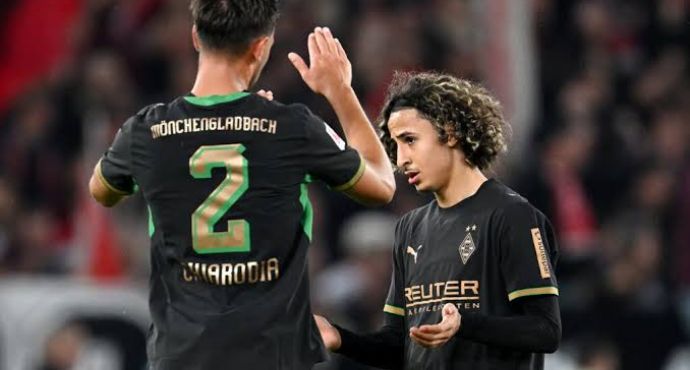 Injury-Hit Gladbach Stun Stuttgart to Claim Heroic First Bundesliga Win
-
 Mail: Mourinho Doesn't Trust Alexander-Arnold's Defending; Won't Entrust Him with Big Games at Real Madrid
