
 Vietnam


Ballon d'Or Trophy Maker: "All Four of My Children Are Fans, but I Have to Keep It a Secret"
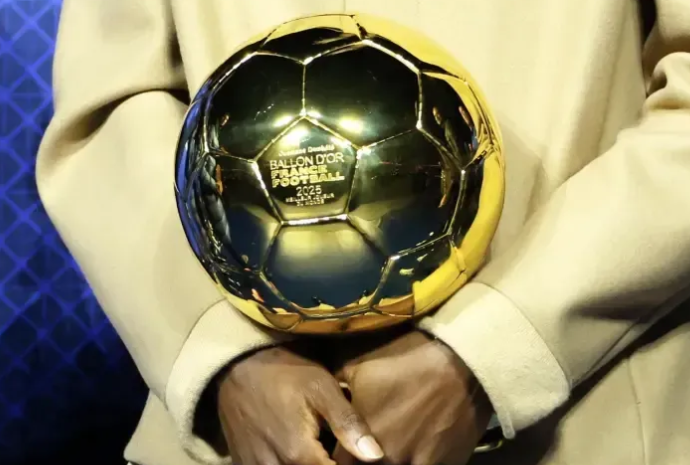
October 25 – According to Marca, winning the Ballon d'Or means not only being recognised as the world's best player of the year, but also taking home an artistic masterpiece handcrafted by master jewellers. It is not merely a trophy, but a piece of fine jewellery carrying centuries of traditional craftsmanship.
At 9 Rue de la Paix in Paris, just off the luxurious Place Vendôme, sits the famous Mellerio jewellery house — the birthplace of football's most precious honour. Unlike factory production lines, the Ballon d'Or trophy is forged entirely by hand using brass, flame, and chisel, taking over 100 hours of meticulous work. Engraved on the trophy is the French phrase "Meilleur joueur du monde" (Best player in the world) — for players, it is the key to eternal status in football's pantheon.
This year marks the 70th trophy the Mellerio family has crafted for the Ballon d'Or. The tradition has continued since 1956, when Stanley Matthews won the inaugural award. Although the trophy gleams with gold, Laura-Isabelle, the current head of the Mellerio family, explains that it is not made of solid gold — it is brass on the inside, plated with gold on the outside.
As one of the very few people who knows the winner in advance, Laura admits she feels great pressure: "I have four children, all passionate football fans, and they constantly try to extract information from me. But I must maintain my professional integrity and keep the secret until the very moment of the ceremony."
The crafting process is extremely meticulous. Craftsmen first heat two hemispherical brass pieces until they glow cherry-red, then hand-forge them into a sphere. The hemispheres are then joined with silver solder, pickled to remove impurities, and finely filed. Next, craftsmen use hammers and chisels to engrave the football's distinctive stitching pattern onto the surface. Finally, through electroplating, a uniform layer of pure gold is applied to the trophy's surface.
The base is the most distinctive part of the piece — it is made from natural pyrite. Because every piece of pyrite has a unique shape and texture, each year's trophy (weighing around 10-12 kg) differs slightly in weight and appearance. Laura reveals: "If you look closely at the Ballons d'Or Messi has received, you'll notice their bases are actually all different. Every trophy is unique in the world." At the ceremony, the spot where the name is engraved is initially covered by a small metal plate, and only when the winner is revealed does football's biggest secret finally come to light.
The history of the Mellerio family is the stuff of legend. They emigrated from Italy to Paris as early as 1515, and after helping the French royal family foil a plot, they were granted a special licence by Queen Marie de' Medici. Historically, Queen Marie Antoinette, Empress Joséphine, and the Spanish royal family were all loyal clients. The "Shell Tiara" worn by current Spanish Queen Letizia on major occasions is also a 19th-century piece by the family.
Beyond football's Ballon d'Or, the famous tennis trophy for the French Open — the Coupe des Mousquetaires — also comes from this workshop. Rafael Nadal has kissed that trophy 14 times, and after achieving his "decima" (tenth title), Roland-Garros even made an exception and allowed him to take home a full-size replica. This Monday, two new football superstars will join the ranks and officially take possession of this "eternal ball" forged by a century of craftsmanship.
Source: Marca
The Most Popular
-
 FC Barcelona vs. Real Madrid: Match Prediction---2026/10/26
-
 Manchester United vs. AFC Bournemouth: Match Prediction---2026/10/25
-
 Inter Milan vs. Fiorentina: Match Prediction---2026/10/25
-
 SC Freiburg vs. Bayern Munich: Match Prediction---2026/10/26
-
 Injury-Hit Gladbach Stun Stuttgart to Claim Heroic First Bundesliga Win
-
 Mail: Mourinho Doesn't Trust Alexander-Arnold's Defending; Won't Entrust Him with Big Games at Real Madrid
